Adopting AI Without Adopting Tech Debt
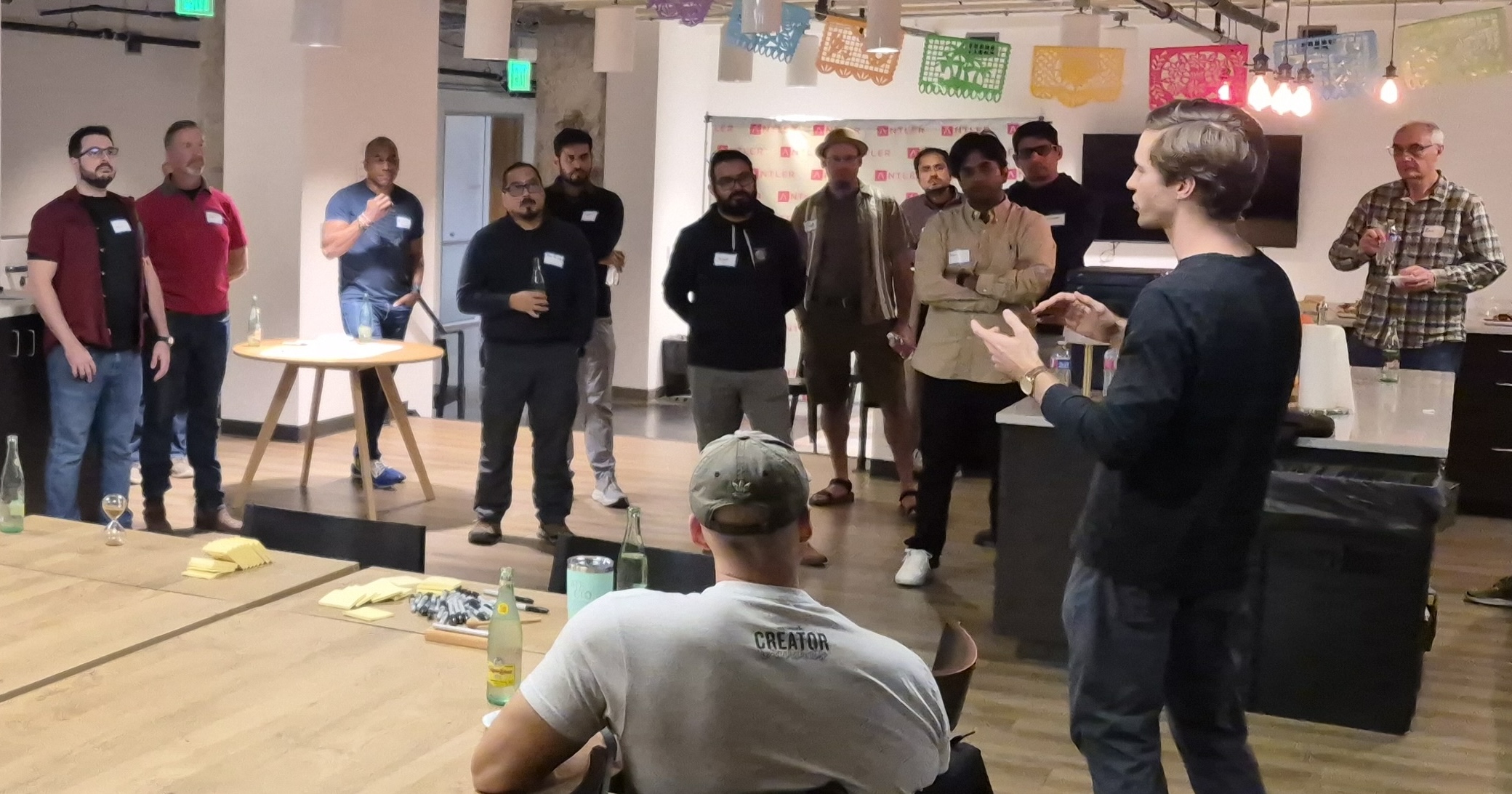
Austin CTO Club Talk Jan 2026
[Updated 2026-02-05] This is the blog adaptation of a talk I gave at the Austin CTO Club in January 2026:
TL;DR: Minimize AI-era tech debt through context window management (Skills, markdown, monorepos), smaller teams with clear system boundaries, and open-source MCP App and ChatGPT App tooling.
Hi, I’m Abe. I recently sold my company, Trigo, where I was CTO building AI in property tech. Over the last few months I’ve been focused on the forefront of AI while building my new company, sunpeak, the leading MCP App framework.
Software development looks very different today, and I no longer think about tech debt the same way. I group my approach to minimizing AI-era tech debt into three areas: tech, people, and how we ship AI-native software.
Tech
Coding
Ground zero for AI tech discussions. Leading coding agents include Claude Code, OpenAI Codex, Cursor, GitHub Copilot, and Gemini Code Assist. Specifics here focus on Claude, where I am currently maxing out three subscriptions.
Unlike humans, agents don’t struggle with deadlines or extra work. The real driver for tech debt in an agentic world is misalignment. Keeping all developers agents rowing in the right direction is key, and the way to do that is via context window management:
- Context windows are 200k to 500k tokens in Claude Code, which are about 500 - 1250 pages of text
- We need to fit everything about our company, policies, vision, market, product, organization, team, project, personal preference, feature specification, and current conversation in this window
- Everything single thing you hope your senior engineers know
- We can host a bunch of markdown from each relevant team and level of the organization hierarchy to ensure all agents have the same context over time
- Agent Skills are one way to accomplish this, implemented as directories with
SKILLS.mdfiles - IT team maintains company policies, SOC-related instructions, handbook. Division leaders maintain… etc. etc.
- Agent Skills are one way to accomplish this, implemented as directories with
Coupled with context window management, the monorepo remains the simplest way to keep context unified across related systems.
Ancillary Tech
A 10x increase in coding speed requires a 10x increase in everything around it:
- Code review: GitHub Copilot, CodeRabbit
- Testing: coding agents can do this really well, use Playwright MCP, Chrome devtools MCP
- CI/CD, infra, monitoring: anything defined as code the agents do well
- Security: Semgrep, Snyk, Dependabot with cooldowns
People
People are far more productive, but our human context windows haven’t changed in 200,000 years. To stay on the same page, teams need to be smaller.
- Smaller teams with tighter coordination
- Larger ownership per engineer
With empowered individuals and small teams, it becomes more important to have clear boundaries around systems to maximize autonomy & speed with decentralization. If Amazon made the switch to a Service Oriented Architecture at 7,000 employees, that number is much, much lower today.
Additional tactics to keep people coordinated with AI:
- Agentic access to your ticketing and other SDLC systems via MCP
- Dedicated early adopter(s)
- Clear product processes around specs, reviews, and launches
Shipping AI-Native Software
The proliferation of agents has come with the need for new types of software systems more usable by agents. Besides Skills mentioned above, we builders are being tasked with building novel MCP and MCP App systems.
MCP
Model Context Protocol (MCP) lets agents interact with our systems. If skills are the static websites of the agent internet, MCP servers are the dynamic websites.
MCP is about a year old and should be treated as early infrastructure. It will change significantly, especially following its move from Anthropic to the Linux Foundation.
There’s no way to avoid a significant amount of technical debt as the Model Context Protocol (MCP) changes out from under us, but we can at least offload some of the work to other people by adopting open-source software. In MCP, a great open-source protocol utility is mcp-use.
MCP Apps (ChatGPT Apps)
MCP Apps (also known as ChatGPT Apps) let anyone embed interactive, visual apps in ChatGPT conversations for use by ChatGPT’s 800M users and ChatGPT itself. If a user is asking about cold symptoms, OpenAI can render the CVS map of nearby stores for medicine. The MCP Apps introduction covers the architecture in detail.
MCP Apps launched as ChatGPT Apps in October 2025. They are MCP-based, but include extra OpenAI-specific UI protocols on top.
Like (and alongside) MCP, this protocol will change a lot and we can offload work to open-source software. For MCP Apps, the leading framework is sunpeak, which I’ve been building the last few months! You can get started with the quickstart guide.
Get Started
pnpm add -g sunpeak && sunpeak new
Frequently Asked Questions
What causes tech debt when using AI coding agents?
Unlike human developers, AI agents don't struggle with deadlines or extra work. The primary driver of tech debt in agentic development is misalignment—when multiple agents work with inconsistent context, leading to architectural drift and conflicting implementations.
How do you manage context windows for AI coding agents?
Context windows are 200k-500k tokens (500-1250 pages). Use markdown files organized by team and hierarchy to ensure consistent context. Implement Agent Skills via SKILLS.md files in directories, and use monorepos to keep related code unified.
How should team structure change with AI coding productivity?
With 10x coding speed, teams should be smaller with tighter coordination and larger ownership per engineer. Clear system boundaries become more important to maximize autonomy and enable decentralization. Service-oriented architectures become practical at much smaller company sizes.
What is MCP and why does it matter for AI adoption?
MCP (Model Context Protocol) lets AI agents interact with your systems. Think of Skills as static websites and MCP servers as dynamic websites of the "agent internet." MCP is about a year old and will change significantly, especially after moving to the Linux Foundation.
What are MCP Apps and ChatGPT Apps, and how do they relate to MCP?
MCP Apps (also known as ChatGPT Apps) let developers embed interactive UI apps in ChatGPT conversations for 800M+ users. They launched in October 2025 and are MCP-based with additional OpenAI-specific UI protocols. Use the sunpeak MCP App framework to minimize protocol change-related tech debt.
How do you minimize tech debt with emerging AI protocols?
Adopt open-source software to offload protocol evolution work. For MCP, use utilities like mcp-use. For MCP Apps and ChatGPT Apps, use the sunpeak MCP App framework. This lets maintainers handle protocol changes while you focus on your product.
What AI coding tools work best for reducing tech debt?
Leading coding agents include Claude Code, OpenAI Codex, Cursor, GitHub Copilot, and Gemini Code Assist. Complement with code review tools (CodeRabbit), testing frameworks (Playwright MCP, Chrome DevTools MCP), and security scanners (Semgrep, Snyk, Dependabot).
What organizational tactics help coordinate AI-assisted development?
Enable agentic access to ticketing and SDLC systems via MCP. Designate early adopter champions. Establish clear product processes around specs, reviews, and launches. Maintain shared context documentation that both humans and agents can reference.